Popular Mobilization Forces: How Were They Formed, and Why?
The PMF began as a response to the rise of ISIS in 2014 and later became a legally recognized military formation within Iraq's armed forces. Its structure and internal relationships are now part of a broader process of reorganization concerning the future role of armed factions and the state's authority over weapons and security decisions.
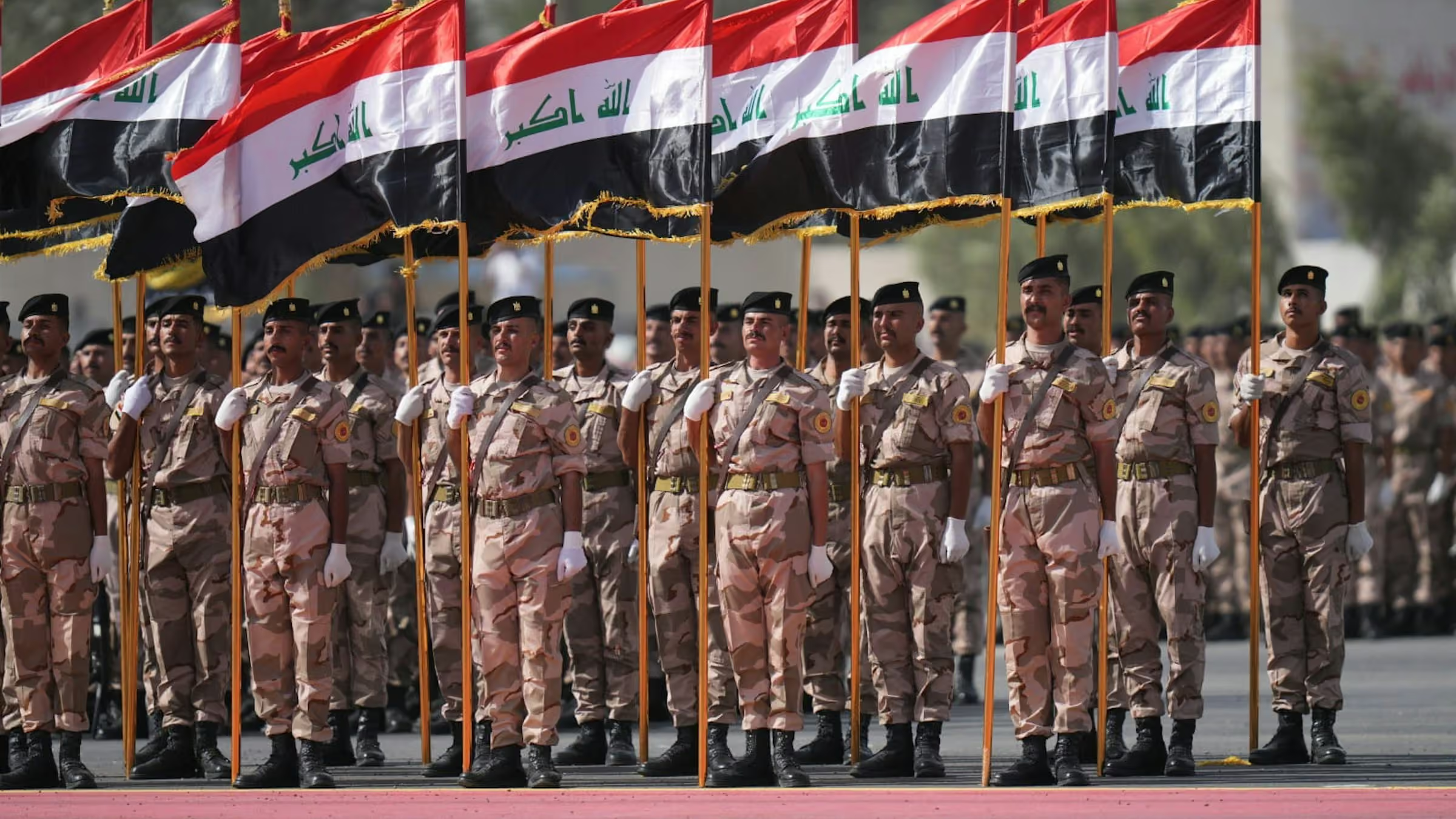
The PMF began as a response to the rise of ISIS in 2014 and later became a legally recognized military formation within Iraq's armed forces. Its structure and internal relationships are now part of a broader process of reorganization concerning the future role of armed factions and the state's authority over weapons and security decisions.
Popular Mobilization Forces: How Were They Formed, and Why?
The Popular Mobilization Forces (PMF), or Popular Mobilization Commission, became one of the most important components of Iraq's security and military structure. The force emerged in 2014, following the rapid expansion of ISIS and its capture of large areas of Iraq, alongside the “al-Jihad al-Kifa’i” religious ruling issued by Iraq's senior Shiite cleric Ali al-Sistani, which called on those capable of carrying weapons to volunteer to confront the group.
In 2016, Iraq's parliament passed Popular Mobilization Commission Law No. 40 of 2016, formally establishing the PMF as a military formation within Iraq's armed forces and placing it under the authority of the commander-in-chief of the armed forces. The law describes the formation as consisting of a command, general staff, branches and combat brigades.
The PMF, built from what?
“The PMF is not a single military organization made up of one faction. It is an umbrella structure bringing together a wide range of armed groups with different political, sectarian and regional backgrounds.”
The PMF cannot easily be described as a single homogeneous organization. It contains multiple factions and formations that differ in size, influence, geographic presence and political or regional relationships.
Its broader structure has included Shiite factions, Sunni tribal formations, and Turkmen, Christian, Yazidi and Shabak units. The political and military relationships of these formations also vary considerably.
As a result, the PMF operates as an umbrella structure rather than a completely uniform organization with a single political or ideological reference point.
Between Najaf and Tehran
The major Shiite factions within the PMF differ in their political and religious relationships. Some maintain close ties with Iran, while others are more closely associated with the religious establishment in Najaf.
Other formations are connected to Iraqi political and social organizations. This has created a structure in which different factions maintain different networks of political, religious and organizational relationships.
Leadership and changes within the PMF
The Popular Mobilization Commission is headed by Faleh al-Fayyad, while Abdul Aziz al-Muhammadawi, known as “Abu Fadak,” serves as chief of staff. Muhammadawi was selected for the position in 2020, succeeding Abu Mahdi al-Muhandis, who was killed alongside Iranian Quds Force commander Qassem Soleimani in a U.S. strike near Baghdad airport in January 2020.
The PMF after ISIS
The role of the PMF changed after Iraq declared victory over ISIS at the end of 2017. Its activities gradually shifted from direct combat operations toward security missions, territorial deployment and operations against remaining ISIS cells.
However, the PMF continued to contain multiple factions with distinct political and organizational relationships, making the question of restructuring the force and consolidating military authority under state institutions an ongoing issue in Iraq.
Saraya al-Salam and a new phase
On May 27, 2026, Muqtada al-Sadr announced the complete separation of Saraya al-Salam from the National Shiite Movement and its integration into the Iraqi state and the authority responsible for military formations.
On June 4, 2026, Iraq's Security Media Cell said that a government plan for weapons handover, restructuring and security integration had begun in Samarra, as part of a broader program to reorganize armed formations.
On July 2, 2026, the Popular Mobilization Commission announced that PMF 36th Brigade had taken over responsibility for securing Samarra and its external checkpoints from 315th Brigade, which had been associated with Saraya al-Salam.
Other factions move away from the PMF
Following al-Sadr's move, Asaib Ahl al-Haq and Kataib Imam Ali announced in early June 2026 steps to separate from the Popular Mobilization Forces and establish committees to inventory their weapons and personnel, according to Iraqi reporting.
These developments indicate that the PMF is undergoing a period of organizational change as the Iraqi government works to redefine the relationship between armed formations and state institutions, particularly regarding military command and control over weapons.
Have information about this story?
Reach our newsroom through a secure, encrypted channel.